
How Often Should You Clean Your Brine Tank in Elm Grove WI?
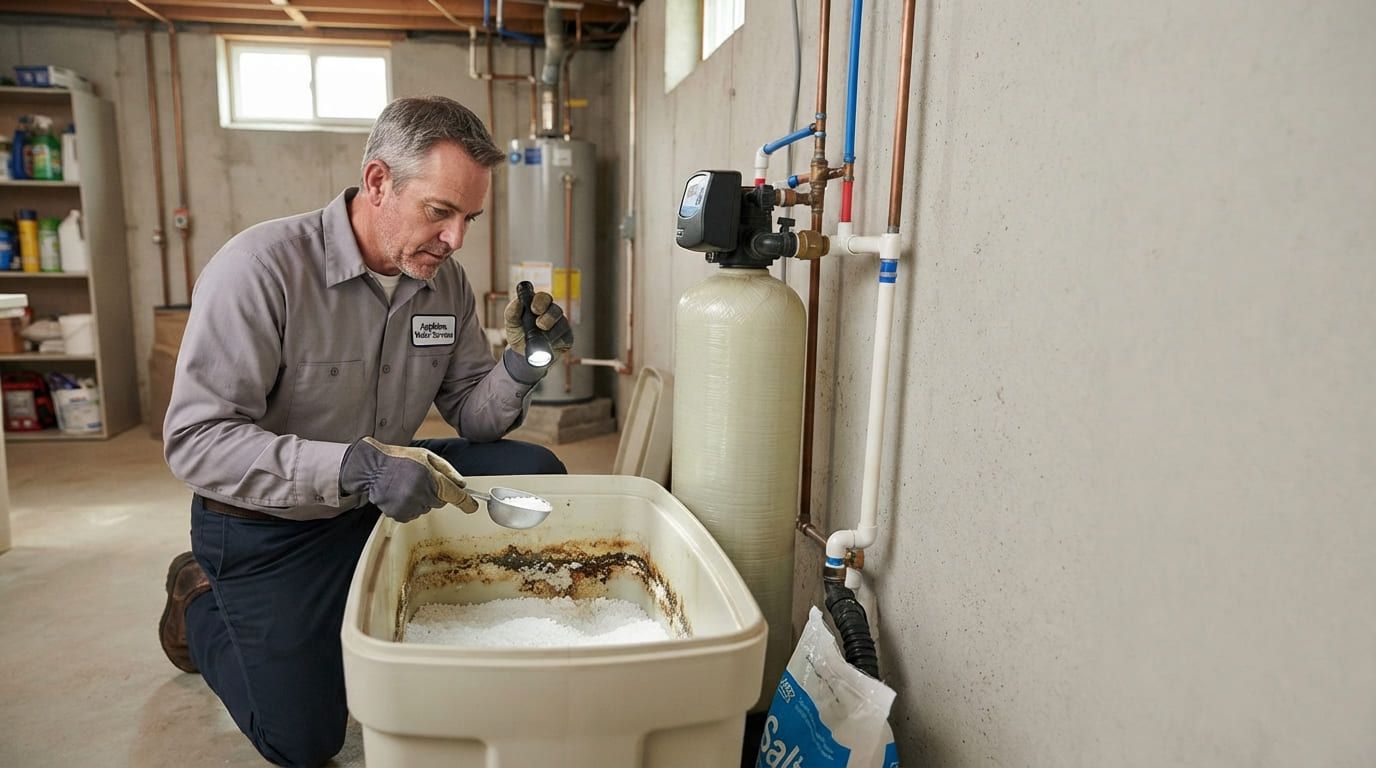
Your water softener depends on a clean and properly maintained brine tank to regenerate effectively. Learn when cleaning is needed, what buildup to watch for, and how maintenance supports reliable soft water.
A water softener can quietly work for years without much attention, which makes it easy to forget about routine maintenance. However, the brine tank deserves occasional attention because it plays an important role in the regeneration process.
For homeowners in Elm Grove, WI, keeping the brine tank clean can help the softener continue operating as intended. Salt residue, sludge, and other material can accumulate inside the tank over time. When buildup becomes excessive, it may interfere with the way salt and water interact during regeneration.
Cleaning the tank is not something most homeowners need to do every few weeks. In many cases, an annual inspection and cleaning is a practical starting point, although individual systems may require a different schedule.
Why Does the Brine Tank Need Cleaning?
The brine tank stores the salt and water used to create the brine solution needed during regeneration. As the softener operates, salt dissolves and the resulting brine helps restore the resin inside the main mineral tank.
Over time, the brine tank can collect leftover salt, sediment, sludge, and residue. These materials can settle at the bottom or collect around the inside walls.
A small amount of residue does not necessarily mean the system is failing. However, allowing significant buildup to remain for long periods can make maintenance more difficult and may affect normal operation.
How Often Should You Clean It?
For many residential systems, cleaning the brine tank approximately once a year is a reasonable maintenance routine.
That does not mean every Elm Grove home will need exactly the same schedule. The condition of the tank, household water usage, type of salt, water quality, and age of the equipment can all influence how frequently maintenance is necessary.
It is a good idea to inspect the tank periodically rather than relying only on a calendar reminder.
If you see substantial sludge, unusual residue, or hardened salt, the tank may need attention sooner.
Signs Your Brine Tank Needs Cleaning
Knowing what to look for can help you catch maintenance issues early.
Thick Sludge at the Bottom
A layer of thick material at the bottom of the tank can develop as salt and other residue accumulate. A significant amount of sludge is a good reason to inspect the tank more closely.
Hardened Salt
Salt can sometimes form large hardened masses. A particularly problematic form is a salt bridge, where a solid layer forms above the water and prevents the salt underneath from dissolving properly.
Unusual Odor
A noticeable unpleasant smell coming from the tank can indicate that cleaning or inspection is needed.
Changes in Soft Water
If your faucets begin developing more mineral deposits or your water no longer seems as soft as it normally does, the cause may be related to regeneration, salt conditions, settings, or another component of the system.
Cleaning the tank may help, but troubleshooting should not stop there.
A Simple Brine Tank Cleaning Process
Before cleaning your tank, always check the manufacturer's instructions. Different systems can have different components and maintenance requirements.
Step 1: Put the System Into Bypass
Follow the equipment instructions to place the softener into bypass before beginning maintenance.
Step 2: Remove the Salt
If the tank contains a large amount of salt, carefully remove it. Avoid damaging the walls of the tank or any internal components.
Step 3: Remove Sludge and Residue
Inspect the bottom of the tank and remove accumulated material. Pay attention to areas around the internal components where residue may collect.
Step 4: Wash the Tank
Clean the tank according to the manufacturer's recommendations. Do not introduce household cleaning chemicals unless they are specifically approved for your equipment.
Step 5: Rinse Thoroughly
Any remaining cleaning material or loose debris should be rinsed away before the system is placed back into service.
Step 6: Add Fresh Salt
Use the salt recommended for your specific softener. Do not overfill the tank, since you need to be able to monitor the salt level.
Step 7: Return the System to Service
Follow the manufacturer's instructions to take the softener out of bypass and return it to normal operation.
What About Bacteria and Standing Water?
A neglected brine tank can collect residue and organic material along with salt deposits. Keeping the tank reasonably clean is therefore part of good equipment maintenance.
However, the brine tank should not be treated as though it were a drinking water storage container. Its purpose is to create the brine needed for regeneration, not to provide drinking water.
If you are concerned about contamination, unusual odors, or the condition of the tank, professional inspection can help determine whether additional cleaning or service is appropriate.
Cleaning Is Only One Part of Maintenance
A clean brine tank does not guarantee that the entire softener is working properly.
The system also needs the correct hardness setting, adequate salt, a functioning regeneration cycle, and properly operating components. The resin inside the mineral tank may also become less effective over time.
If your water remains hard after cleaning the brine tank, avoid assuming that the tank itself was the only problem. Testing the water and inspecting the equipment can help identify the actual cause.
When Professional Service Makes Sense
Some homeowners are comfortable performing basic maintenance, while others prefer to have their water treatment equipment professionally serviced.
Professional help can be especially useful when the tank contains heavy buildup, the system is not regenerating correctly, the water remains hard, or you are unsure how the internal components work.
An inspection can address more than the visible condition of the brine tank and help determine whether the rest of the system is operating properly.
Keep Your Elm Grove Water Softener Ready to Work
A brine tank may not be the most noticeable part of your water treatment system, but it has an important job. Giving it regular attention can help prevent excessive buildup and make it easier to spot developing problems.
For homeowners in Elm Grove, WI, an annual inspection and cleaning is a useful starting point, combined with occasional checks throughout the year.
Elm Grove Water Softener can help homeowners with water softener maintenance, troubleshooting, and water treatment needs. If your brine tank has heavy buildup or your system is no longer producing the soft water you expect, professional service can help identify the problem and keep your water treatment system operating properly.
