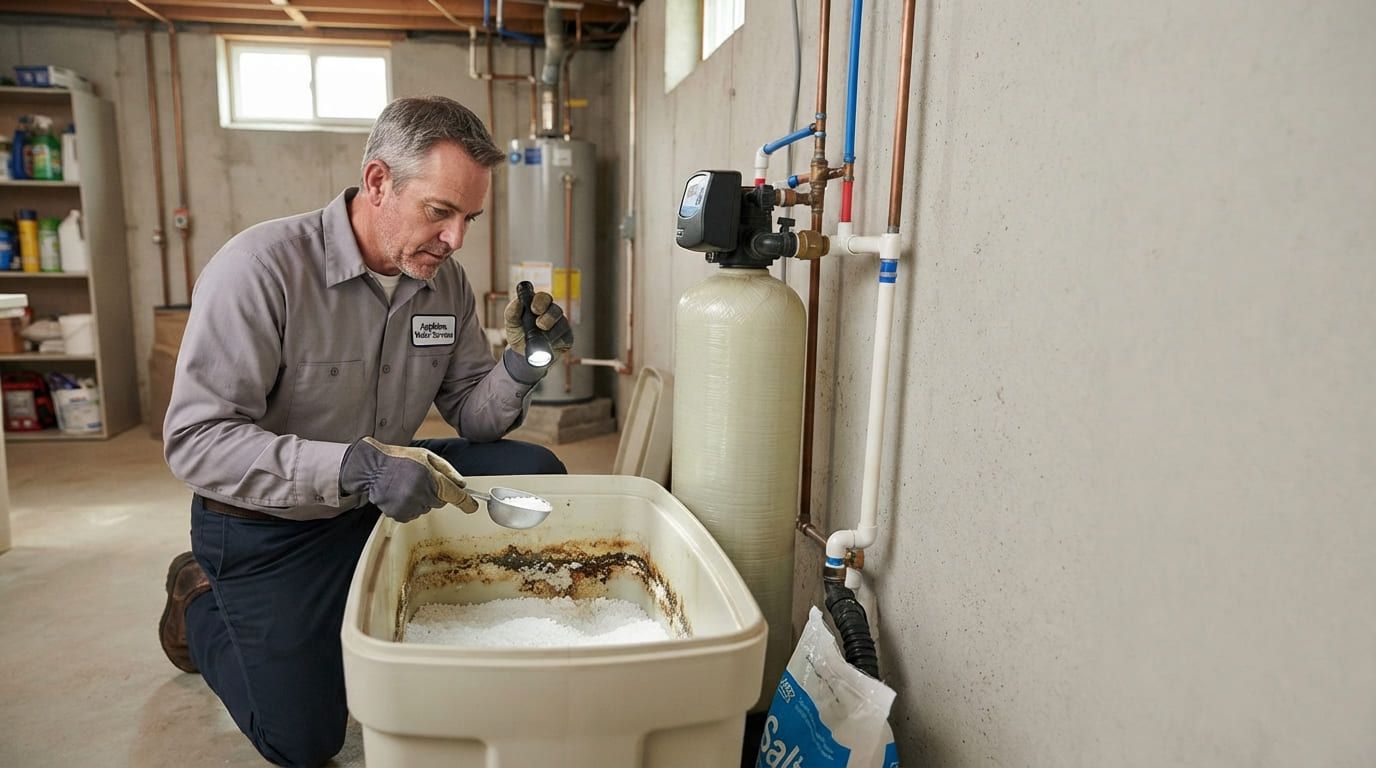
Why You Should Not Rely on a Water Softener to Remove Iron in Elm Grove WI

Rust colored stains, discolored water, and mineral buildup can point to different water quality problems. Learn why a conventional water softener may not be enough to manage iron and when dedicated filtration may be a better solution for your Elm Grove home.
Why Iron in Water Can Cause Household Problems
Iron can enter household water naturally through groundwater or come from corroding plumbing components. When present in sufficient amounts, it may leave reddish brown stains on sinks, toilets, bathtubs, laundry, and other surfaces. Some forms of iron can also affect the appearance, taste, and odor of water.
For Elm Grove homeowners, identifying the source of the problem is especially important. According to the Village of Elm Grove, most properties rely on private wells, while some properties receive municipal water through the City of Brookfield's water utility or other community systems.
Because water conditions can vary between properties, one home's iron problem may not be the same as its neighbor's. Testing your water can help determine whether iron is present and which treatment method is appropriate.
What Does a Water Softener Actually Remove?
A conventional water softener is designed primarily to reduce calcium and magnesium, the minerals responsible for hard water. Inside the system, resin beads capture these minerals through a process called ion exchange.
Some softeners can also remove limited amounts of certain forms of dissolved iron under suitable conditions. However, this does not make them a complete iron filtration system.
When iron accumulates on the resin, it can interfere with the softener's ability to remove hardness minerals. This may reduce treatment performance, contribute to maintenance problems, and shorten the useful life of the resin if the issue is not addressed.
Simply adding more salt will not solve every iron problem. The correct approach depends on the type and concentration of iron, the water chemistry, and the capabilities of the installed equipment.
Understanding the Different Types of Iron in Water
Iron can occur in several forms, and each may require a different treatment approach.
Dissolved Iron
Dissolved iron, often called ferrous iron, may be present in water that looks clear when it first comes from the tap. After exposure to air, the iron can oxidize and form orange or reddish brown particles.
These particles may eventually stain fixtures, clothing, and other surfaces. Some water softeners can handle limited amounts of dissolved iron, but the allowable amount varies by system and water conditions.
If testing confirms elevated iron, a dedicated treatment system may offer better protection for the softener and more consistent results.
Oxidized Iron
Oxidized iron consists of particles that can make water appear rusty, cloudy, or discolored. These particles may collect in plumbing fixtures and treatment equipment.
Depending on the water chemistry and particle size, treatment may involve oxidation followed by filtration or another suitable filtration method. A standard softener should not automatically be assumed capable of removing these particles effectively.
Iron From Plumbing Components
Rust colored water does not always mean the groundwater itself contains excessive iron. Corroding pipes, fittings, or other plumbing components can introduce iron into household water.
If discoloration appears suddenly, occurs mainly at one fixture, or begins after plumbing work, investigate the plumbing as well as the water source. A water test and professional inspection can help distinguish between these possibilities.
Why a Dedicated Iron Filter May Be a Better Solution
A dedicated iron filtration system is selected according to the type and amount of iron present in the water. Depending on the results of testing, suitable treatment may use oxidation, specialized filter media, or a combination of processes.
For some homes, installing iron treatment before the water softener can reduce the amount of iron reaching the resin beads. This can help protect the softener and allow each system to perform its intended function.
However, there is no single iron filter that works best for every property. The right equipment depends on iron concentration, pH, water flow, household demand, and whether other substances such as manganese or sulfur compounds are present.
A water test should guide the decision before equipment is selected or installed.
Why Elm Grove Homeowners Should Test Their Water
Elm Grove has a mix of water arrangements, including private wells and properties connected to municipal or community systems. This means homeowners should not assume that every property has the same water quality or hardness level.
Private well owners should arrange appropriate water testing and repeat it according to public health recommendations and any changes in water quality. Testing can help identify iron and may also be appropriate for hardness, manganese, pH, bacteria, and other concerns depending on the source and symptoms.
Homeowners connected to a public water system can review the applicable utility's water quality reports. If the problem appears only at their own taps, testing the water at the property may help identify a plumbing or treatment issue.
A test provides useful information before investing in a new filter or modifying an existing softener.
Signs That Iron May Be Affecting Your Water Softener
Several symptoms may indicate an iron problem, although none is conclusive on its own.
- Orange or reddish brown stains around sinks, toilets, and bathtubs
- Rust colored marks on laundry after washing
- Water that develops discoloration after standing
- Metallic tastes or unusual odors
- A water softener that no longer reduces hardness as expected
- Repeated maintenance problems despite adequate salt and correct settings
These symptoms can have other causes, including plumbing corrosion, sediment, or different water quality issues. Testing is the best way to determine whether iron is responsible.
If iron is confirmed, a water treatment professional can help determine whether the softener needs cleaning, whether pretreatment is appropriate, or whether the existing equipment should be replaced with a more suitable system.
How to Protect Your Water Softener From Iron Buildup
If your water contains iron, follow the manufacturer's maintenance recommendations. Some systems permit approved resin cleaning products, but the correct procedure depends on the equipment and the type of iron present.
Avoid adding unapproved chemicals or increasing salt use without understanding the cause of the problem. These steps may not remove the iron effectively and could create additional maintenance issues.
If iron levels exceed the softener manufacturer's recommended limits, consider appropriate pretreatment. A properly selected filtration system can help reduce the iron load before water reaches the resin.
Regular water testing and maintenance can also help identify changes before they lead to more serious treatment problems.
Find the Right Iron Treatment Solution in Elm Grove WI
A conventional water softener is useful for reducing hardness minerals, but it should not be treated as a complete solution for every iron problem. The right treatment starts with identifying the source of the iron, measuring its concentration, and selecting equipment suited to the actual water conditions.
Elm Grove Water Softener helps homeowners in Elm Grove, WI explore water softening, iron filtration, and whole house water treatment options. Contact Elm Grove Water Softener to discuss rust colored stains, water discoloration, and treatment options designed around your home's water quality.